



Understanding your rights as a tenant can make a major difference when you’re dealing with unsafe conditions, unexpected rent increases, landlord harassment, Housing Court, or the possibility of eviction.
Neighbors Together’s Community Action Program (CAP) regularly hosts Leadership Development Trainings to give community members the knowledge, confidence, and resources they need to advocate for themselves and their neighbors.
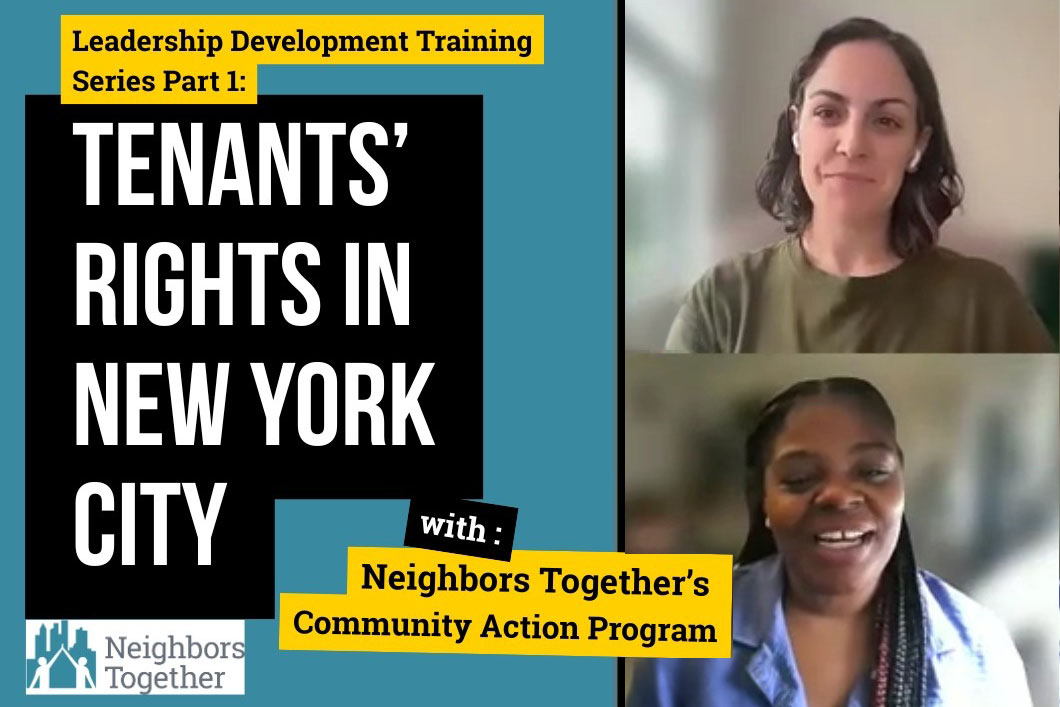
If you weren’t able to attend one of our recent trainings, we’re bringing the information directly to you with this two-part video series.
In Part 1, learn about tenants’ rights and important legal protections available to New York City renters. In Part 2, learn how Housing Court and the eviction process work, how to recognize an illegal eviction, and where to turn for help.
The trainings are led by Amy Blumsack, Director of Organizing and Policy, and Nailah Abdul-Mubdi, Community Organizer, as part of the Community Action Program at Neighbors Together.
Part 1: Know Your Rights as an NYC Tenant
Every tenant in New York City has the right to a safe and livable home. That includes access to essential services such as heat, hot water, clean water and electricity, as well as necessary repairs to address conditions such as broken floors, walls, doors and windows, mold, lead paint and pest infestations.
But knowing that you have rights is only the beginning. Part 1 focuses on how tenants can actually exercise those rights and create a record when something is wrong.
What You’ll Learn in Part 1
Start by understanding what protections apply to your home
One of the most important points from the training is that tenant protections are not identical for every apartment. Knowing your rights starts with understanding what type of apartment you live in and which New York City or New York State laws apply to it.
The training discusses three major areas of tenant protection:
- Good Cause Eviction protections, which may cover certain tenants living in unregulated apartments and provide protections against certain unreasonable rent increases, retaliatory evictions and lease non-renewals.
- Rent stabilization, which regulates allowable rent increases and provides important lease-renewal protections for tenants in covered apartments.
- The Housing Stability and Tenant Protection Act of 2019 (HSTPA), which strengthened tenant protections throughout New York State in areas including security deposits, application fees, notice requirements and other rental practices.
Not every apartment is covered by the same laws, which makes researching your individual apartment an important first step.
Document problems with your apartment or building
If your landlord is not providing necessary services or making required repairs, the training encourages tenants to create a paper trail.
That can include:
- Calling 311 to report unsafe conditions or needed repairs.
- Checking HPD Online to research your building, complaints and violations.
- Following the status of previously filed complaints.
- Using JustFix to help request repairs, determine whether certain tenant protections may apply and request your apartment’s rent history.
HPD Online can also provide valuable information about your building and landlord, including past complaints and violations, litigation history and other building information.
Know your rent history
For tenants who may live in rent-stabilized apartments, requesting your apartment’s rent history can be particularly important.
A rent history can help you understand whether an apartment has historically been rent stabilized and whether the rent being charged is consistent with applicable protections.
Knowing your apartment’s history gives you information you may need to ask better questions, identify possible problems and seek additional assistance.
Additional Resources from the Tenants’ Rights Training
HPD Online – Building Information
https://hpdonline.nyc.gov/hpdonline/
Research your building, complaints, violations and other housing information.
JustFix
https://www.justfix.org/en/
Tools that can help New Yorkers request repairs, research tenant protections and access information about their apartments.
Good Cause Eviction Law
https://www.nyc.gov/site/hpd/services-and-information/good-cause-eviction.page
Learn more about Good Cause Eviction protections and whether they may apply to your home.
Rent Stabilization
https://www.nyc.gov/site/mayorspeu/programs/rent-stabilization.page
Learn more about rent stabilization and protections available to covered tenants.
Mayor’s Office to Protect Tenants – Tenant Protection Laws
https://www.nyc.gov/content/tenantprotection/pages/tenant-protection-laws
Explore additional New York City tenant protection laws and resources.
Part 2: Understanding Housing Court and the Eviction Process
Receiving a notice from your landlord can be frightening—especially when that notice contains words like “eviction” or says you must leave your home.
But one of the most important messages in Part 2 is this:
A landlord cannot simply decide to evict you.
A legal eviction involves a process. According to the training, a Housing Court judge must issue the appropriate judgment and warrant, and an authorized city marshal or sheriff carries out the eviction.
A warning, demand letter or other notice from your landlord is not by itself the same thing as a court-ordered eviction.
Understanding that distinction is critical because fear can cause tenants to leave their homes before they have exercised the rights and options available to them.
What You’ll Learn in Part 2
Housing Court handles different types of housing disputes
The training walks through several situations that may bring landlords or tenants into Housing Court, including:
- Nonpayment cases involving unpaid rent.
- Holdover cases, involving situations other than nonpayment, such as certain lease or occupancy disputes.
- HP actions, which tenants may bring to address serious housing conditions, repairs or harassment.
- Illegal lockout cases, in which a tenant seeks help after being unlawfully locked out of their home.
Each situation has its own process, notices and possible outcomes.
An eviction happens through a legal process
Part 2 walks tenants through the steps that can occur during an eviction case—from notices and a Housing Court petition to court appearances, possible settlements, judgments and, ultimately, a warrant of eviction.
The trainers emphasize the importance of responding to Housing Court documents, confirming court dates, keeping track of your case or index number and seeking legal representation.
During the court process, tenants may also have opportunities to request additional time to obtain an attorney or gather information and evidence.
Don’t “self-evict”
This is one of the most important takeaways from the entire series.
A landlord notice may look official, intimidating and final. But receiving a notice does not necessarily mean you must immediately leave your apartment.
Leaving voluntarily out of fear can mean giving up time and opportunities you may have had through the Housing Court process—including the chance to seek legal representation, present your case, reach an agreement or potentially access assistance that may help you remain housed.
Do not assume that a landlord’s letter means the legal eviction process is complete. Seek help and understand your options before making a decision to leave your home.
Know what an illegal eviction can look like
Part 2 also explains that an eviction that does not follow the required legal process may be illegal.
Examples discussed in the training include:
- Changing the locks.
- Blocking access to your apartment.
- Removing a door.
- Cutting off heat, hot water, gas or electricity in an effort to force you out.
- Intentionally allowing dangerous conditions to go unrepaired in an effort to make you leave.
The training also discusses tenant harassment, which may include threats, intimidation, repeated pressure to move, attempts to make tenants give up their rights, destruction of belongings, excessive disruption or other behavior intended to force someone from their home.
If you are experiencing these situations, document what is happening and seek assistance.
You may have access to free legal help
New York City tenants who meet eligibility requirements may be able to receive free legal representation through the city’s Right to Counsel program.
The training strongly encourages tenants facing Housing Court proceedings to ask about legal representation rather than trying to navigate a stressful and complicated process alone.
Other organizations and programs can also help tenants understand the court process, address rental arrears or explore resources that may help prevent the loss of housing.
Additional Housing Court & Eviction Resources
Housing Court Answers
https://housingcourtanswers.org/answers/for-tenants/
Information and assistance for New York City tenants navigating Housing Court.
Homebase
https://www.nyc.gov/site/hra/help/homebase.page
Homelessness-prevention services that may be able to help eligible New Yorkers remain in their homes.
Legal Services for Tenants / Right to Counsel
https://www.nyc.gov/site/hra/help/legal-services-for-tenants.page
Learn how eligible New York City tenants can access free legal assistance for eviction and other housing-related proceedings.
Right to Counsel Providers by Borough
https://www.nyc.gov/assets/hra/downloads/pdf/services/civiljustice/HRA-OCJ-Tenant-Legal-Services-Providers.pdf
Find participating legal service providers throughout New York City.
Knowledge Is Power—And Community Makes It Stronger
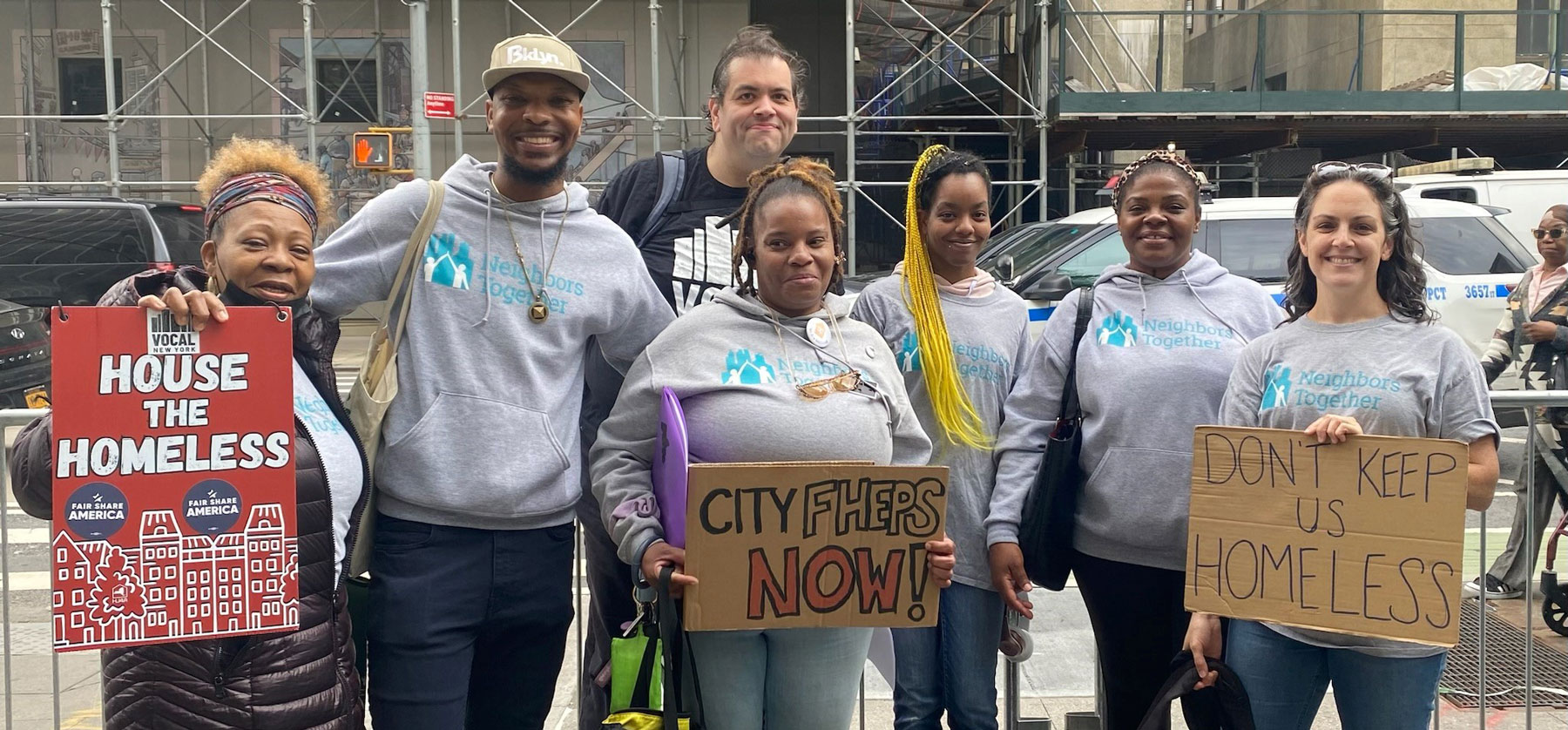
Neighbors Together’s Community Action Program goes beyond providing information. CAP brings together people with lived experience of homelessness and housing instability to build leadership, advocate for themselves and their communities, and fight for policies that make safe, dignified and truly affordable housing possible for all New Yorkers.
Whether you’re dealing with a housing issue now or simply want to better understand your rights, these trainings are an opportunity to become more informed, more confident and better prepared to take action.
Learn more about the Community Action Program
Want to attend an upcoming meeting, training or community event?
View the Neighbors Together Calendar
This training and article are provided for educational and informational purposes and are not a substitute for individualized legal advice. If you are facing an eviction or other legal housing issue, consider speaking with a qualified legal services provider.
